.png?width=200&height=66&name=logo%20(1).png "HomesAlive Pets Canada")

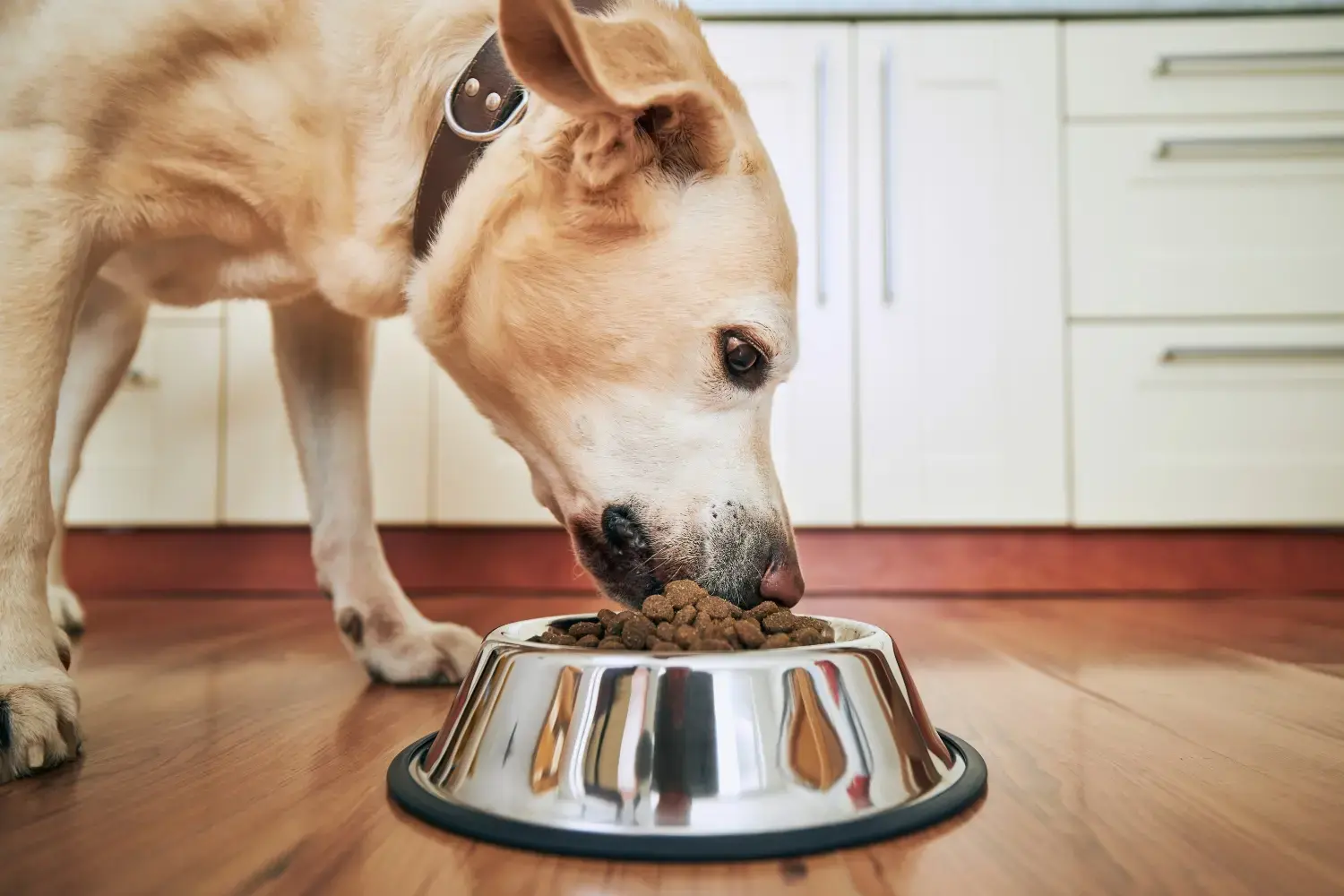
Bad dog breath isn’t normal, and it’s not something you have to live with. Dog dental health often doesn’t get the attention it deserves, which is why many pet parents overlook how choosing the best dental care dog food can play a meaningful role in supporting oral health.
Too often, bad breath is brushed off as normal, or dental disease is assumed to only affect senior dogs.
In reality, oral health problems can begin early and quietly worsen over time, leading to painful gum disease, chronic bad breath, and even tooth loss. The food you choose plays a bigger role than most people realize when it comes to combating dental disease and supporting healthier teeth.
If you have ever wondered whether dog food can cause bad breath, what food helps dogs' bad breath, or how to choose the best dental care dog food, you are not alone, because many pet owners are wondering the same things.
This guide walks through how food impacts dental health and highlights strong pet food options available at Homes Alive Pets.

Dog Dental Health Starts With Food
Dental disease is one of the most common health issues in dogs. Plaque and tartar build up on the teeth, allowing bacteria to multiply along the gum line.
Over time, the bacteria can lead to inflamed gums, loose teeth, infections, and even systemic health problems that affect the heart, liver, and kidneys. Food influences your dog’s dental and oral health far more than people expect.
Certain textures of dog food help mechanically clean teeth during chewing. Also, some ingredients support healthier gums. Poor-quality foods can leave behind sticky residues that encourage plaque growth (almost like when you drink a soda or other sugary substance, it impacts your oral health).
This is why the best dog food for dental health is not just about nutrition. It is about how the food interacts with the canine’s mouth every single day.
Many pet parents first start researching the best dental dog food because of the smell. They notice their dog’s breath is worsening and begin asking questions like what food helps dogs' bad breath or whether switching food could actually make a difference in their dog’s oral health. The answer is often yes.
Can Dog Food Cause Bad Breath?
Absolutely. This is one of the most common and overlooked contributors to chronic bad breath in a dog.
Low-quality kibble that breaks apart too easily, diets high in simple carbohydrates, and foods that leave sticky residues on the dog’s teeth can all contribute to faster plaque buildup along the gum line. Once bacteria thrive in the mouth, doggy bad breath quickly follows.
Highly processed ingredients can also affect gut health, and digestive issues can sometimes present as bad breath as well. This is why choosing the best oral care dog food is not just about texture, but it’s also about ingredient quality.
If you are asking whether dog food can cause bad breath, the more accurate question might be whether dog food can improve breath. With the right formula, it can help Fido smell better.
It is also important to acknowledge that many pet parents discover the hard way when trying to improve their dog’s oral health and breath. Sometimes, even the best dog food for dental health will not fix bad breath, because food is not always the root cause.
Bad breath that smells unusually strong, sweet, metallic, or rotten can sometimes point to underlying health concerns and have nothing to do with oral health.
However, dental disease is the most common, but it is not the only possibility. Infections in the mouth, broken teeth, abscesses, or advanced gum disease can all cause a bad odour that no food change will correct.
To learn more about building an effective at-home dental routine, check out our Complete Dog Dental Care Guide.
Causes of Bad Dental Health in Dogs
While dental disease is one of the most common causes of oral health problems in dogs, not every issue starts in the mouth. In some cases, changes in a dog’s breath or oral comfort can be linked to underlying health conditions elsewhere in the body.
Potential non-dental contributors can include:
-
- Digestive issues
- Kidney Disease
- Liver Conditions
- Other systemic health concerns
This is why the question “Can dog food cause bad breath?” needs a balanced answer. Yes, food can contribute, but it is not always the cause.
Signs Your Dog Needs Veterinary Attention
Persistent and worsening dental issues are a good reason to loop in your vet. Here are some signs to be on the lookout for:
-
- Sudden or intense changes in breath
- Excessive drooling
- Pawing at the mouth or face
- Changes in appetite or chewing behaviour
- Redness, swelling, or irritation along the gum line
That doesn’t mean dental care dog foods aren’t effective. In fact, they play an important role in prevention and ongoing oral health support. Dental diets are most effective when used consistently and early, rather than as a solution for advanced dental disease or unrelated medical issues.
Think of the best oral care dog food as a long-term investment in Fido’s oral health and not a substitute for medical care when something is wrong with your pet’s general health. Many pet parents notice the biggest improvements when they combine a thoughtful food choice with occasional brushing, appropriate chews, and routine dental checkups.
Breed and Lifestyle Matter More Than Most People Realize
When people search for the best dental care dog food, they often expect a one-size-fits-all solution. In reality, your dog’s breed, size, and daily habits play a big role in determining which food will actually support their dental health and which might not be effective for your dog.
Dental Health for Different Breeds
Some breeds are simply more prone to dental problems. Small breeds like Chihuahuas, Yorkies, and Dachshunds often develop plaque and tartar faster because their teeth are crowded into smaller jaws.
That is one of the main reasons many pet parents specifically look for the best dental dog food for small dogs. These tiny dogs benefit from eating dog food with smaller kibble that encourages chewing, plus formulas designed to support gum health in small dogs are beneficial.
Large breeds like Labradors tend to be enthusiastic eaters who swallow food quickly without even chewing in most cases. That can limit how much natural tooth-cleaning happens during meals.
For these dogs, larger, denser kibble designed to slow down eating can make a real difference in their oral health. That is where formulas designed for large breeds and chewing behaviour work best when selecting the best dental dog food.
Lifestyle Affects Oral Health
Lifestyle matters too when picking dog food for oral health. Dogs who regularly chew on toys, natural chews, or enrichment items often have better dental health overall.
Dogs who are more sedentary, anxious chewers, or light chewers may rely more heavily on their food to support oral hygiene and health. That does not mean food alone will solve your furry friend’s dental problems, but it does mean the right combination can play a bigger role depending on your dog’s habits.
If you are trying to decide what food helps dogs with bad breath in your specific situation, it helps to step back and look at the whole picture.
Breed tendencies, chewing style, and daily routine all influence which dental dog food will be most effective at maintaining your furry friend’s oral health.

Best Dental Care Dog Foods
Dental-specific dog foods are designed with structure, size, and ingredients that help reduce plaque and tartar buildup on your dog’s teeth. Many of the dental dog food brands are backed by veterinary nutrition research and have measurable benefits when fed consistently.
Best Vet-Recommended Dental Dog Food
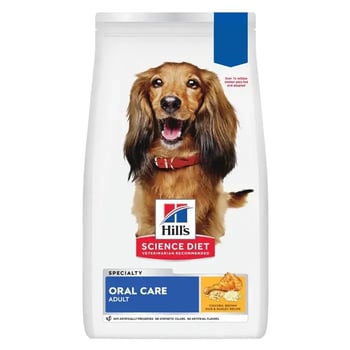
Hill’s Science Diet Adult Oral Care is a widely trusted vet-recommended, non-prescription option for everyday dental support. It’s designed to help manage plaque and tartar buildup through a specialized kibble structure, making it a practical option for dogs that need extra oral health support without moving to a prescription diet.
The kibble is made with clinically proven technology that helps reduce plaque and tartar when fed regularly. Veterinarians often recommend this formula for:
-
- Dogs with mild to moderate dental issues
- Dogs at higher risk due to breed, age, or dental history
If you’re looking for the best vet-recommended dental dog food without needing a prescription, this option offers an accessible, research-backed way to support your dog’s oral health as part of a regular routine.

Best Dental Dog Food for Large Breeds
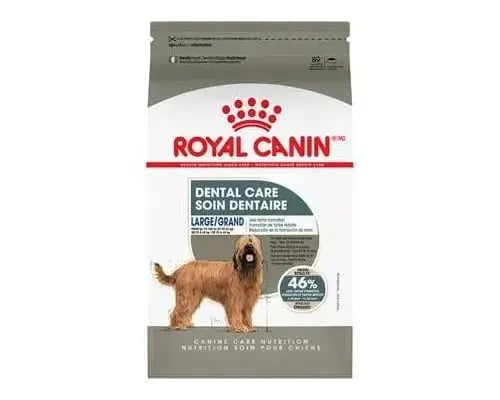
Royal Canin Dental Care for Large Adult Dog Breeds is a complete and balanced dry food designed to support daily oral health in large-breed dogs. This formula is developed using veterinary nutrition research and focuses on reducing plaque and tartar buildup through kibble design rather than added dental agents.
It’s intended for long-term feeding as part of an everyday dental care routine, making it a practical option for large dogs that need consistent oral health support.
Large breeds often face different oral health challenges than smaller dogs:
-
- Larger teeth and wider jaws create more surface area for plaque buildup
- Many large dogs are fast eaters who swallow kibble without chewing
This formula addresses both issues with a large, dense kibble that encourages chewing and reduces gulping habits. By combining thoughtful mechanical design with complete nutrition, this recipe is an easy win for big dogs with a consistent brushing and oral care routine.

Best Dental Dog Food for Small Breeds
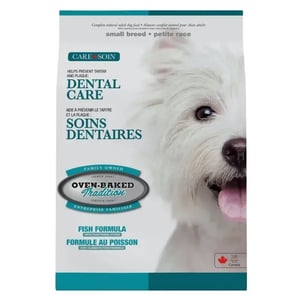
Oven-Baked Tradition Small Breed Dental Care Dry Food is a great option for small dogs, who are notoriously prone to dental disease. Instead of relying on highly processed kibble, this formula uses an oven-baked method that focuses on preserving nutrition while supporting dental care through texture and chewing.
Smaller mouths often mean:
-
- Teeth are more crowded, leading to tighter spaces for bacteria to hide
- Faster plaque buildup
- Higher risk of oral issues over time
This oven-baked formula uses a very gentle baking process rather than high-heat extrusion, giving it a unique texture that encourages better eating habits and the mechanical cleaning action of chewing. The unique process and clean ingredient list help to preserve nutrition and support digestion and overall health.

Best Dry Dog Food for Dental Health
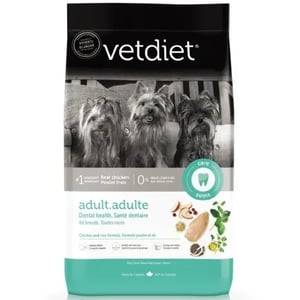
Vetdiet Dental Health Dry Food for Adult Dogs is a targeted dental-support formula designed for everyday feeding. It's a smart choice for dogs that are starting to show early signs of dental issues or for pet parents who want to be proactive.
This formula is developed with veterinary input and focuses on supporting oral hygiene while still providing complete daily nutrition. Here's why many pet parents prefer dry food for dental health:
-
- Kibble structure designed to reduce tartar accumulation
- Balanced ingredient profile for overall health
- Suitable for ongoing dental management
For people searching for the best dry dog food for dental health, this type of targeted formula often offers a practical middle ground between standard kibble and prescription-only diets, so it’s definitely worth giving a try.


Raw Food for Dog Dental Health
Many pet parents worry that feeding raw food will make their dog’s breath smell worse, especially when considering a switch away from kibble. It’s a common concern, but when done properly, raw feeding often has the opposite effect.
A balanced raw diet can support dental health in several important ways:
-
- Natural chewing action: Chewing raw meaty bones under proper supervision provides mechanical cleaning, similar to how wild canines clean their teeth. The tearing and chewing motion can help naturally scrape plaque from the tooth surface.
- Lower starch content: Raw diets are typically lower in starch than many kibbles. Less starch means less residue left behind on the teeth after meals, which can reduce plaque buildup over time.
- Enzymes in raw meat: Fresh raw meat contains naturally occurring enzymes that can help combat bad breath–causing bacteria in the mouth, supporting fresher breath when paired with good oral hygiene.
That said, raw feeding needs to be done thoughtfully and responsibly. Diets must be nutritionally balanced, food safety should always be a priority, and bone choices need to match your dog’s size, chewing style, and experience. Raw feeding isn’t a casual switch, and it’s not right for every dog or household.
When done correctly, raw food can be part of a well-rounded oral health strategy rather than a contributor to bad breath. If someone asks whether raw food makes a dog’s breath smell, the honest answer is that it often improves breath when the diet is balanced and combined with good dental care habits.
Best raw brands for dental health:
All these brands are Canadian-owned and crafted and offer a wide range of recipes to suit your dog's unique needs and preferences.
Foods and Ingredients That Support Oral Health
Beyond full meals, some foods and ingredients are commonly associated with fresher breath for your pooch. Here are a few of the types of ingredients that could help support better dental health:
-
- Crunchy textures that encourage chewing tend to support cleaner teeth
- Ingredients that support gut health can reduce odours that originate internally
- Certain dog-safe herbs, such as parsley, are sometimes used in treats for breath support
- Probiotics can also indirectly help by supporting healthier digestion
That said, no food completely replaces brushing your dog’s teeth. If a dog already has established dental disease, changing food alone will not reverse it. But picking the right food can absolutely support better breath and slower plaque buildup over time.
For pet parents wondering what food helps dogs' bad breath, the best answer is a combination of dental-focused kibble, high-quality ingredients, and a consistent brushing routine that all work together best to reduce odour.
Learn more about the dental benefits of natural chews in Best Long Lasting Dog Chews.
Dog Food Is Part of a Complete Oral Care Routine
One important thing to remember is that the best dental care dog food is a tool and not a cure for gum disease or other oral health problems.
Food plays a powerful supporting role, but it should be viewed as one piece of a complete dental care routine and not the sole one. Even the best dental dog food cannot fully replace direct dental hygiene practices.
An effective oral care routine often includes:
-
- Regular tooth brushing with dog-safe toothpaste
- Dental chews designed to reduce plaque
- Water additives recommended by veterinarians
- Professional dental cleanings when needed
Think of dental food as daily maintenance for your dog’s teeth. It helps slow the buildup and supports overall oral health, but it works best when combined with other dental and oral dog health practices.
Check out How to Brush Dog Teeth to start building your dog's dental routine.
Best Dental Care Dog Food FAQs
Does dental dog food really work?
Yes, when fed consistently and paired with regular toothbrushing, many dental formulas are shown to reduce plaque and tartar buildup compared to standard kibble. However, please remember that they are not miracle cures, but they can make a meaningful difference over time.
Can dog food cause bad breath even if my dog is healthy?
Yes. Lower-quality foods, high-starch diets, and kibble that leaves residue can all contribute to bad breath even in otherwise healthy dogs.
What if my dog refuses to eat dental food?
Palatability matters when picking dog food for Fido. Sometimes it takes trial and error to find the right formula that your pooch will love. Mixing transitions slowly and choosing a flavour your dog enjoys can help.
Is dental food safe for puppies?
Most dental formulas are designed for adult dogs and not puppies. Always check age guidelines and consult your vet before feeding dental diets to growing puppies, which probably do not need such food.
Can dental food replace brushing?
No. Dental dog food supports oral health, but brushing remains the gold standard for plaque removal on your dog’s teeth along the gumline.
Choosing the Best Dental Care Dog Food for Your Dog
There is no single best dental dog food for every dog. The right choice depends on your dog’s size, chewing habits, current dental condition, ingredient sensitivities, and lifestyle.
If your dog is small and prone to plaque buildup, a small-breed dental formula makes sense to feed. However, if your dog is large and tends to gulp food, larger dental kibble designed to encourage chewing can be more effective in removing plaque and maintaining oral health.
If your dog already has dental issues, a vet-recommended option may be the most appropriate starting point to help combat oral disease in a dog.
The most important thing is consistency when using good food for oral health. Feeding the best dog food for dental health only occasionally will not produce meaningful results. Like most health strategies, it works best when it becomes part of your dog’s everyday routine at meal time.
Explore Homes Alive Pets’ curated selection of dental care products to help your dog stay comfortable, healthy, and happy at every stage of life.