.png?width=200&height=66&name=logo%20(1).png "HomesAlive Pets Canada")

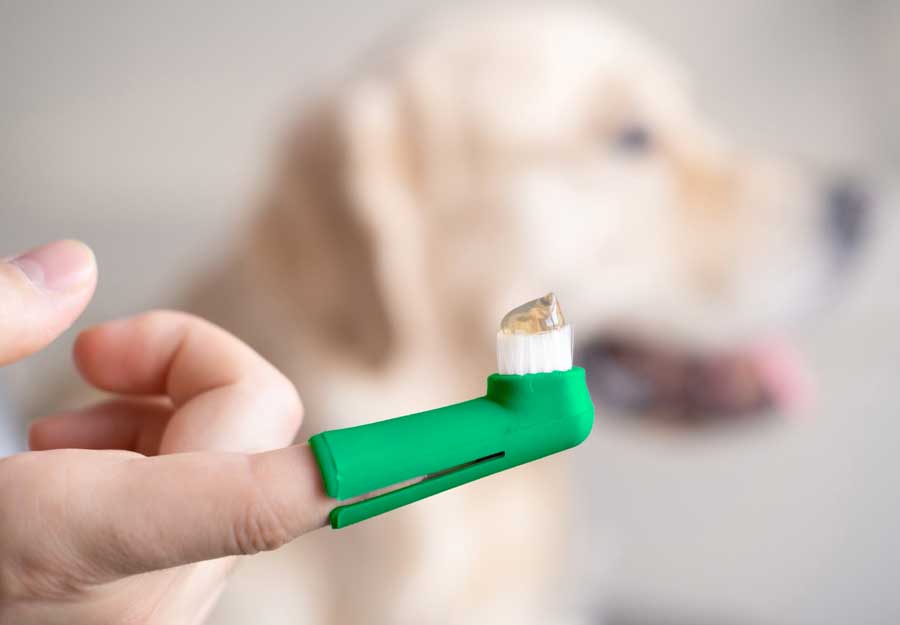
Does your dog have bad breath? While it’s one of the most common things pet owners notice, it’s often the first reminder that dental care deserves regular attention, not just when problems appear.
Persistent odour is rarely the issue on its own. In most cases, it reflects what’s happening inside the mouth, including plaque buildup, bacteria, and gum irritation. Paying attention to changes in your dog’s breath can help you catch dental concerns early and support better oral health over time.
Dental health can affect many aspects of your pet’s overall well-being, including comfort, digestion, and immunity. When oral health issues go unchecked, they can lead to tooth decay, abscesses, or infection. Bacteria from the mouth can also enter the bloodstream and place strain on vital organs, such as the heart.
Building a consistent dental care routine helps support your dog’s health well beyond their teeth and gums, and can reduce the likelihood of more involved dental problems later on.
The Stats On Dog Teeth Cleaning (And Cats Too!)
Is poor dog dental care really that common? Do you really need to clean dog teeth? These dog dental stats prove that the answer to both of those questions is a resounding yes!
Did you know: According to the American Veterinary Dental Association, over 80% of dogs and 70% of cats are showing signs of dental disease by the ripe age of just three?
That’s pretty incredible, considering dental disease is preventable. Pet owners, according to the Veterinary Pet Insurance Co., spend a combined 11 million dollars per year on dental procedures. $11 million on something that is PREVENTABLE!
If we can make simple changes to improve our pets' dental care, then why are the statistics around pet dental health still so alarming?
Vet visits and regular cleanings are recommended, and they aren’t cheap, but a lot of that $11 million was on procedures to fix dental issues that could have been avoided if we spent more time keeping up with our pets' dental health in between vet visits.
The typical adult goes to the dentist twice a year for check-ups and cleaning or scaling. This process helps reduce the build-up that is difficult to remove at home.
What would happen if you didn’t brush your teeth, floss, or participate in any other dental routines in between your dentist appointments?
Obviously, your breath would be horrible, your teeth would rot, and all your friends would start keeping a generous distance from you. Of course, you keep yourself healthy by maintaining a regular dental routine, and this same line of thinking should apply to your pets as well.
Tip: When you’re choosing dental chews or water additives, look for products with the VOHC (Veterinary Oral Health Council) Accepted seal where possible. These tools have been tested to ensure they are effective for at-home dental routines.
Do I Need to Brush My Dog’s Teeth?
Yes. Absolutely. No loopholes. You need to brush your dog's teeth.
Brushing removes more bacteria than any other home dental procedure, so it’s an unavoidable necessity if you want a healthy dog. Oral bacteria hide well. It tucks itself under your dog's gum line, rests in between dog teeth, and even coats their tongue.
The bigger concern is what happens below the surface. Periodontal disease is the decay and deterioration of the bone that holds the tooth. This can lead to teeth dying, breaking, chipping, and even falling out.
Unless you want a toothless dog, you’re going to need to commit to a regular dental routine for your dog.
So why does dental care often get overlooked?
For many pet owners, it comes down to uncertainty. Knowing where to start, which tools to use, or how often to brush isn’t always obvious, and that’s completely okay. Learning how to care for your dog’s teeth is the first step toward making dental care feel more manageable and routine.
Bad Dog Breath Concerns
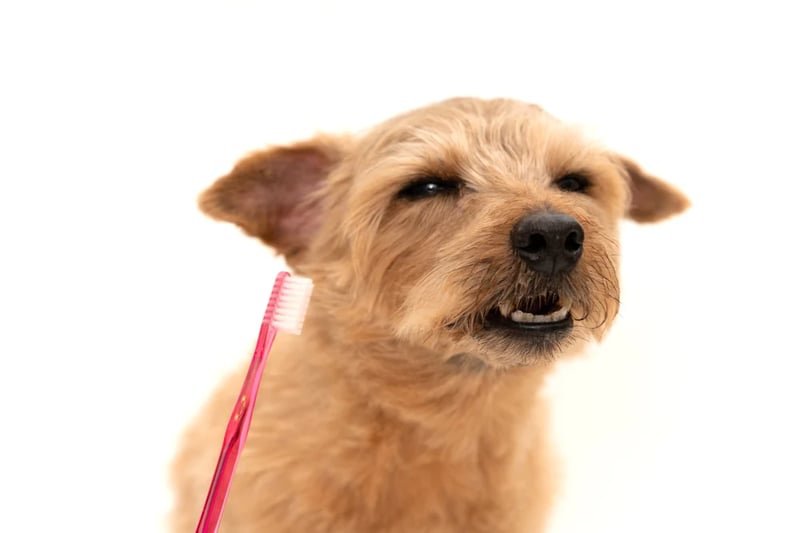
Getting rid of bad dog breath is often a multi-step process. It's not a quick fix, and it will take time and effort on your part to freshen your dog's breath. Fortunately, the long-term benefits of regular dog dental care will quickly outweigh the cost, and time you put into their dental health.
If your pet has offensive dog breath, this should tell you right away it’s time to start a dog teeth cleaning and oral care routine. Before getting into the solutions and best practices, learn a little about what causes dog breath:
Causes of Bad Dog Breath
Dog breath isn’t normal. Most pet owners have become accustomed to their pet’s nasty mouth odour and chalk it up to just being a dog.
This is true to some extent because dogs tend to put a lot of gross things in their mouth, but other bad breath contributors can be controlled, eliminated, or changed to improve your pooch's breath.
Let’s take a look at what’s causing your dog’s bad breath:
Plaque and Tartar
The foundation of bad dog breath is the build-up of food particles on teeth and gums and the resulting bacterial growth, called plaque. If this plaque is not removed from the teeth, over time it hardens and becomes calculus or tartar.
This tartar creates a rough surface that attracts more food particles and plaque, leading to even more tartar build-up. Tartar on dog teeth is much harder to remove than just plaque and often requires veterinary scaling. This is both costly for you and stressful for your pooch.
Dogs Eat Gross Stuff
As much as we would prefer they didn't, some dogs like eating nasty, smelly things, like garbage and poop. Is it gross? Ya. Should you try to prevent them from doing this? As best you can. Are they going to do it anyway? You betcha!
These unpleasant edibles are going to temporarily worsen your dog's breath, but the bacteria they leave behind may contribute to more long-term dog breath issues.
Indigestion and Food Intolerance
While not a primary cause of bad dog breath, indigestion and other gastrointestinal upsets can cause periodic bad breath in dogs. This happens when bacteria from the stomach and esophagus make their way back up to the mouth.
Chronic digestive issues can affect your dog's breath and their overall dental health.
Beyond Bad Dog Breath
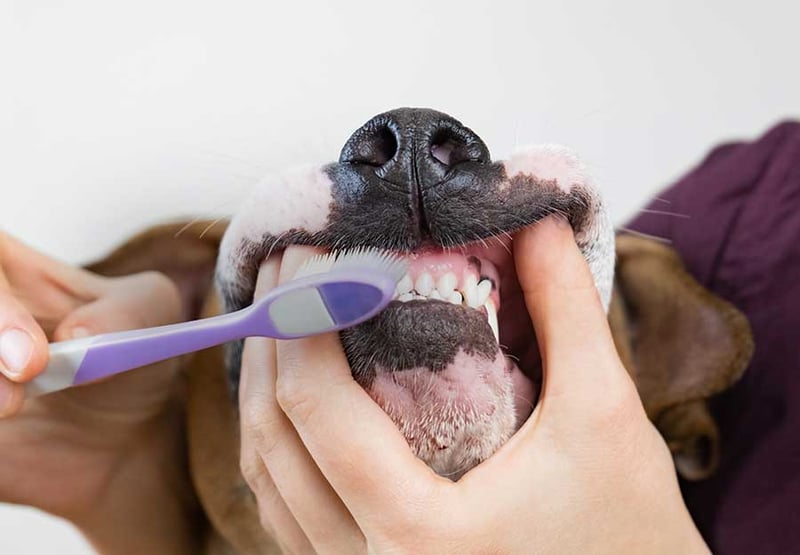
You may think that bad breath is the worst that can happen if you don't brush your dog's teeth, but the reality is much worse. Poor dental health can lead to other health conditions that can easily go unnoticed until they become very serious.
Many serious health issues stemming from poor canine oral health are often caught way too late to fix, but it doesn't have to be this way. Bad breath is the engine warning light for your dog's oral health. When you can spot early signs, you can act to correct them before they lead to something more than just stinky puppy kisses.
Here are some of the things bad breath can contribute to:
Periodontal Disease
Canine periodontal disease (a.k.a. gum disease in dogs, dog dental disease) starts when bacteria in the mouth cause the buildup of plaque and tartar along the gum line.
Bacteria then breed under the gums and begin to deteriorate the supporting tissue and bone around the tooth. This will cause inflammation in the gums and lead to tooth decay. Your dog's immune system naturally kicks in and produces excess white blood cells to attack the bacteria and prevent infection.
Unfortunately, chemicals produced by the white blood cells cause additional damage to the supportive tissues of the tooth by causing inflammation in the periodontal space (between the tooth and gums).
This condition is referred to as periodontitis. If left for too long, the tooth may need to be extracted in an expensive dental procedure.
Heart, Liver, and Kidney Disease
Bad dog breath can be a sign of some very serious conditions. While these conditions are not the usual cause of bad breath in dogs, they are still worth noting. Some of these conditions, such as heart, kidney, and liver disease, can be caused by advanced periodontal disease.
Pay special attention if your dog:
-
-
- Has breath that smells sweet or like urine
- Has bad breath that is accompanied by difficulty in urinating, increased urination, lethargy or extreme tiredness, decreased appetite, profuse vomiting, and yellow-looking gums
- Has any other unusual symptoms or extreme behavioural changes
-
If you are concerned that your dog may have a serious health issue, please consult a veterinarian.
Maintaining good dental care helps reduce bacterial buildup in the mouth and supports overall health. If you notice changes to your dog's breath or a strong, unpleasant odour, it's time to talk to your vet to help you create a home dental care routine for Fido.
Now that you understand the importance of brushing your dog’s teeth, you're ready to learn how to get rid of bad dog breath and keep those pearly whites clean.
10 Tips for How to Brush Your Dog’s Teeth
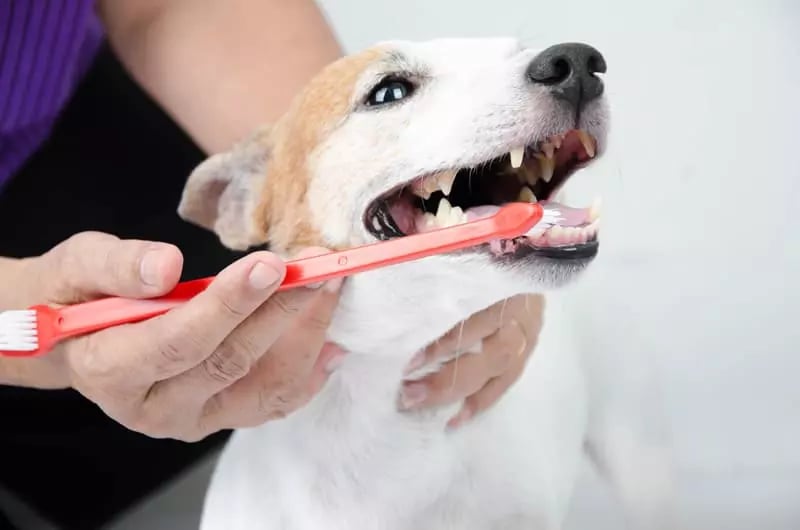
Brushing your dog’s teeth is the most effective way to control plaque and oral bacteria at home. While it can feel intimidating at first, the process becomes much easier with the right tools, patience, and consistency.
It’s about building a routine your dog can tolerate and eventually accept. Even short, regular brushing sessions can make a meaningful difference over time.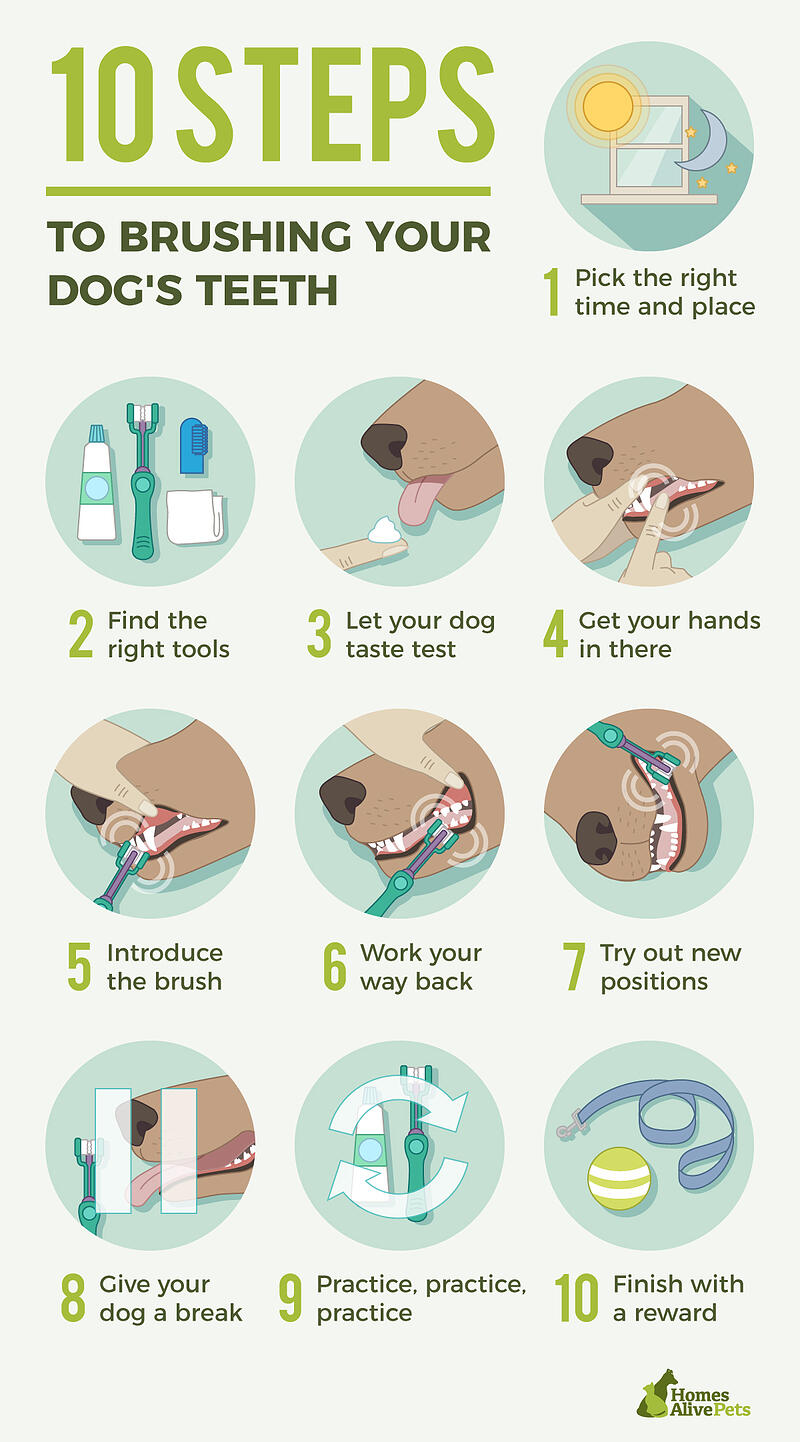
This visual overview highlights the basic steps involved in brushing your dog’s teeth. Visit our complete guide for brushing your dog's teeth for more tips and tricks to make the process more comfortable for both you and your dog.
Some Dogs Hate Getting Their Teeth Cleaned
If you struggle with brushing because your pet hates it, that's completely normal. It's a strange and weird sensation that they are not used to, so it's no surprise that they shy away from it. The trick is to go slow, and be patient.
You will both be bad at it when you start, but small wins over time will help you both learn to adapt and accept the practice. Don't get discouraged. Try different ways and methods of brushing to find the one that is the most manageable and least intimidating for both of you.
Choosing the Best Tools for Brushing Your Dog's Teeth
There are lots of different tools you can use to clean dog teeth and maintain their dental health. It's important to choose the tools that work best for your dog and make the process less stressful and more effective.
Your dog's size, the shape of their mouth, comfort level, and their current dental health can all be factors when choosing appropriate at-home dog teeth cleaning tools.
Here's a quick breakdown of each type of tool to help you decide:
Dog Toothbrushes
The style of toothbrush you choose can affect how much of a struggle and how effective the whole process is. Size, shape, and style should be considered, and you should choose the one that works best for your dog's comfort level.
Traditional human toothbrushes are often too big and shaped incorrectly to effectively reach the nooks and crannies of your dog's mouth. Toothbrushes designed for dogs are typically angled and narrow to allow you to reach hard-to-reach spots.
If your dog is nervous about the toothbrush, then alternatives like a finger toothbrush are a great beginner tool. These rubber or microfibre finger covers allow you to gently massage teeth and gums and get your dog used to the process.
Wipes and swabs can also be used to practice brushing and reach difficult or sensitive spots.
If all else fails, you can start with just your finger and a little bit of tasty dog toothpaste. It won't be as effective as something with more scrubbing action, but it will help your dog acclimate.
Dog Toothpaste
Toothpaste is intended to reduce bacteria while you brush and is a wise choice when planning out your pet’s dental routine. Using toothpaste to brush your pet’s teeth is an effective way to minimize bad breath and prevent plaque and tartar build-up.
The first thing to know is that you should NEVER use human toothpaste on your pet. Toothpaste designed for people is dangerous for pets for two reasons:
-
- Human toothpaste is toxic to pets. Ingredients like xylitol are commonly used to sweeten toothpaste, and xylitol severely compromises animals' liver function.
- Human Toothpaste is a choking hazard for pets. Toothpaste for people contains surfactants or foaming agents. You and I know not to breathe in the foam while we are brushing, but your pet definitely doesn’t.
Thankfully, there are many pet-specific products available, so always choose one of those when using tooth cleaning products in your pet’s dental care.
When choosing a toothpaste or another dental cleaning product for pets, make sure it is appropriate for their species, dog vs cat, and is specifically labelled as an enzymatic toothpaste.
To learn more about what kind of dog toothpaste to choose, hop over to Best Dog Toothpaste for Bad Breath.
Dog Tooth Sprays, Foams, or Gels
Products in the form of gels, foams, or sprays can also help to clean dog teeth and freshen their breath. When applied directly to the gums and teeth or on the underside of the cheeks, gels and sprays work in a similar way to mouthwashes. Here are some great brands that are effective and easy to use:
Your pet tries to lick the product off, spreading the oral cleaner around his or her mouth. For more severe build-up, massaging the gel/spray onto their teeth with a finger toothbrush or just your finger will produce more effective results.
Dog Teeth Wash
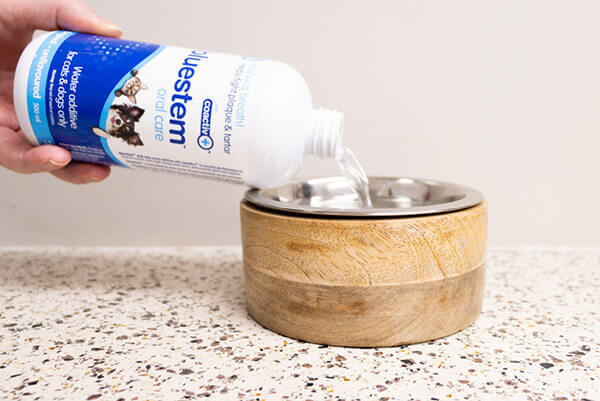
A dog teeth wash, or water additive, is an easy-to-use tool for bacteria control throughout the day. A small amount of the liquid gets added to your pet's water bowl or fountain. As they drink, the solution is moved around their mouth, distributing the dental effects.
When choosing a dental solution, try finding products that contain natural bacteria fighters, like parsley, mint, or chlorophyll. These will be very effective at combating bad breath by reducing the number of bacteria. Products like Tropiclean Fresh Breath are essentially mouthwash for pets, which works great in conjunction with regular tooth brushing routines.
This type of product is not for instant gratification seekers. When we said long-term, we meant it. It can be disappointing not to see the fruits of your labour for weeks or even months, but the product will be effective over time.
Water additives are not always an ideal choice for every pet. Cats, for example, generally don’t drink nearly enough water, as they are instinctually built to get moisture from their diets. For pets that just don’t drink enough, the effects will be significantly muted and possibly completely ineffective.
Another factor to consider that may affect the efficacy of a water additive is the cleanliness of the bowl or dish in which the water is offered. Water bowls should be cleaned weekly to prevent bacteria build-up.
Plastic or rubber bowls should be exchanged for metal, ceramic or glass to prevent further bacteria that can fester in the cracks and scratches of the material.
Dental Food Additives for Dogs
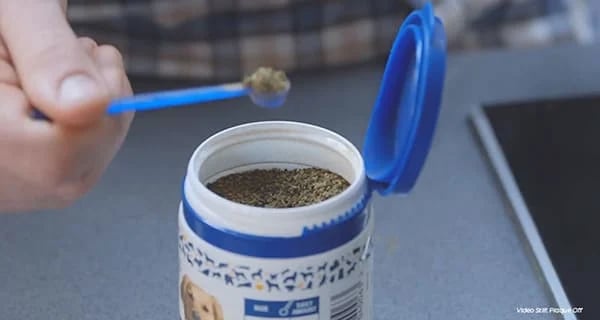
For a different approach that may be more effective for our less-hydrated pets, try a food additive. Similar to water additives, these flavourless, odourless powders can be added to their meals, and they do the rest of the work for you.
Probiotics, like Buco+ Dental Care, are chock-full of healthy oral bacteria to help populate the mouth and overpower the harmful bacteria, stealing their food source and making your dog's mouth an inhospitable environment for bad breath-causing bacteria.
This is an effective way to prevent plaque build-up and bad breath. Simply add the recommended amount of Buco+ to your pet's food, and as they eat, they will naturally circulate the healthy bacteria around their mouth.
Another very effective food additive is Proden Plaque-Off. It works with your pet's saliva to coat the mouth and break down plaque build-up over time, allowing you to brush the softened plaque away.
They claim that once mixed with your pet's saliva, it will continue to work long after the meal is over, providing 24-hour effectiveness.
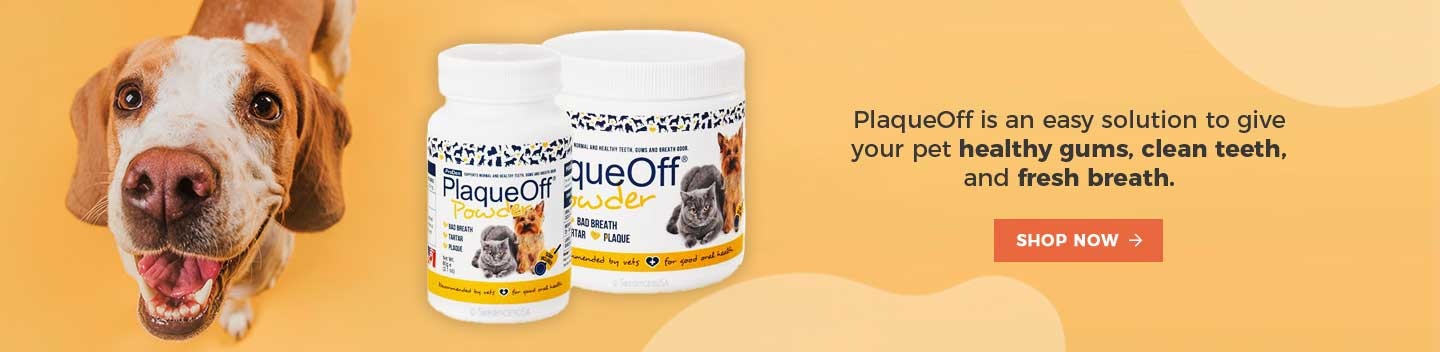
Proden Plaque-Off powder is made of Norwegian sea kelp, so it is all-natural and safe to ingest. We recommend this product for pets that have an existing build-up of plaque.
When used in combination with regular toothbrushing, Plaque-Off is extremely effective for reducing build-up and improving your pet's bad breath.
Dog Food for Dental Health
The food you feed your dog can play a supporting role in their dental health, particularly when it comes to chewing behaviour and the types of ingredients that pass through the mouth. While no diet can replace regular tooth brushing, certain food formats and ingredients may help reduce plaque buildup and support fresher breath over time.
From format to function, different types of dog foods can affect dental health in different ways, so choosing the style that works best for your dog can be a great way to bolster your dog's at-home dental routine.
Is Kibble Best for Dental Health?
Sometimes, but not always.
Kibble has long been touted as a dental solution. Opting for a dental care solution kibble can have many benefits, from changing how your dog chews to including ingredients designed to fight build-up.
But dental kibbles don't work for every dog. Dogs who eat too fast and don't bother chewing properly will not receive the dental benefits. Different breeds and sizes have different mouth shapes, too, so the kibble shape or texture may not work as effectively for every dog.
Additionally, kibble can leave behind food residue, and while it may be scraping away some debris and bacteria, it could be depositing some back. This is why diet needs to be paired with brushing and other dental practices.
Raw Food for Dental Health
One of the best types of diets for dental health is a raw diet. Whether it is dehydrated, freeze-dried, or frozen, raw meat contains enzymes that aid in the breakdown of oral bacteria. Even if there is very little chewing going on, these diets still provide superior dental care to kibble.
Ingredients matter too. Heavily processed, sugary ingredients feed bacteria, intensifying the problem and increasing build-up near the gum line. Raw is naturally low in carbs and filler ingredients, so they leave behind fewer food particles.
Best Type of Dog Treats for Dental Health
Additional dental care products, like treats, can enhance daily dental routines and be a rewarding experience for your pet. Treats designed for dental health contain ingredients like mint, parsley, and chlorophyll to freshen breath and reduce harmful bacteria.
Dog teeth treats can be a simple addition to any dental routine, but depending on the ingredients and calories, they might not be suitable for pets with allergies, digestive issues, or weight problems.
Dog Dental Biscuits
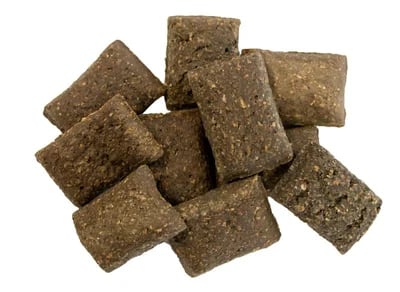 Biscuits are a typical format for a dog treat. Geared towards freshening breath, biscuits have similar effects to some water additives. Treats can be fed regularly and are easy to incorporate into some existing treating routines, like treat training and rewarding good behaviour.
Here are some of our favourites:
While biscuits do have their benefits, just like kibbles, the texture can leave behind debris that can feed bacteria. If you are looking for a treat that is both fun, rewarding and fights bad breath, then biscuits can be a good choice. Just remember to brush.
Dog Dental Chews
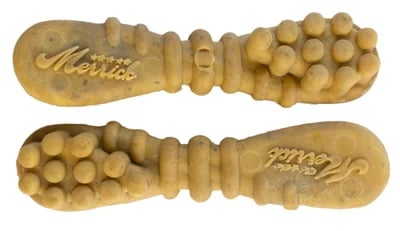 Dental Chews are another common dog teeth cleaning treat format designed to create abrasion through repetitive chewing. While there are many types of dental chews available, they will typically be either hard to encourage chewing or soft enough for your pet’s teeth to sink into while the treat holds its structure.
Dog dental sticks are designed to help scrape away loose bacteria and debris from the teeth and gum line. They also include breath-freshening ingredients like seaweed, coconut oil, and mint to further curb your dog's bad breath. Check out some of our most popular dental chews and bones for dogs.
Check out our full list of the Best Dog Dental Chew Sticks for more recommendations and tips.
Natural Chews for Dogs
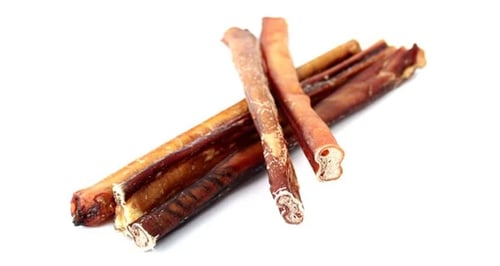 An often overlooked treat for dental health is natural chews. When talking about the effectiveness of dental treats, the focus is on chewing, which is the primary purpose of natural chews. They not only provide a rewarding activity, but they also work the jaw and help remove bacteria and food debris.
Unlike dental treats and sticks, natural chews are meant to be long-lasting. They don’t contain bacteria-fighting ingredients, but many of them soften and can slide between teeth to remove bacteria and food particles, similar to flossing. Beef tendons and bully sticks both share this quality.
Smaller dogs and cats can benefit from natural chews, too. Raw frozen Chicken Feet, Lamb Ears, and even dried Salmon Skins can offer a similar scrape and floss as bigger chews.
Looking for a chew that will keep your dog busy? Hop over to Best Long Lasting Dog Chews to see some of our most popular and hardest-working chews for dogs.
Toys That Clean Your Dog's Teeth
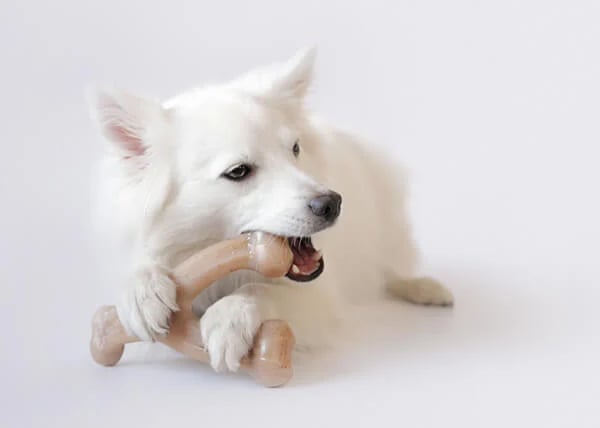
The last method of dental care is toys. Yes, toys can help clean your pet’s teeth! Not every toy works for this purpose, but many toys that are intended for chewing are an excellent way to improve your pet’s dental health in a fun and enjoyable manner.
Some toys are specifically designed for dental health, like Benebones. Rubber toys, like the Petstages Orka Puppy Dental Chew, will massage gums and help remove bacteria and food residue.
These toys can even be combined with a small amount of flavoured pet-safe toothpaste to encourage your dog to chew. This won't replace toothbrushing, but it can contribute to better overall dental health in your dog.
Another great way to utilize dog toys for dental health is to choose textured dog toys and apply a small amount of dog toothpaste or coconut oil. This turns your dog's favourite chew toy into a toothbrush. It won't replace an actual toothbrush, but it is a great way to supplement weekly dog teeth cleaning routines.

Benefits of a Dog Teeth Cleaning Routine
Dental care is multifaceted, and immediate results are rare. This can be frustrating, especially when you are trying multiple methods, and significant results could take weeks or even months to recognize. Look for small changes to tell if your pet’s dental health is improving.
Here are some subtle signs that you are on the right track:
Improved Breath

No one is expecting their pet’s breath to smell good, but seeing an improvement in how bad it can smell is an excellent sign. Better breath means that there is a reduction of harmful bacteria circulating in their mouths, and this can prevent plaque and tartar build-up, which can lead to other serious illnesses and diseases in the future.
Better Eating Habits
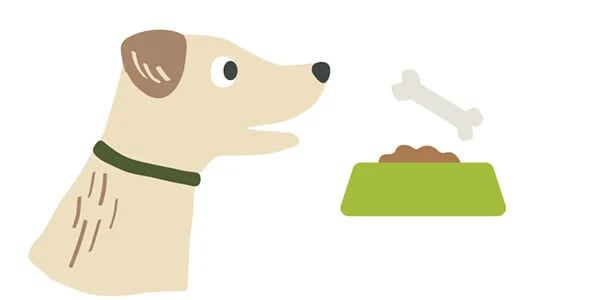
Anyone who has ever experienced dental pain can attest to the fact that how you chew can be affected by your dental health. Something as minor as tooth sensitivity or gum tenderness and inflammation can change the way your pet eats.
As your new dental routine becomes a priority, your pets who don’t chew might start. Pets who typically skip meals or aren’t interested in food may suddenly have an increased appetite.
Pets who refuse to eat hard foods or treats may begin to show an interest in kibble or natural chews. All of these can be signs of improved dental health.
Improved Overall Health
.webp?width=600&height=300&name=improved-health%20(1).webp)
Dental bacteria can affect more than just the mouth. Bacteria that hide under the gum line can be transported through the bloodstream and affect organ function, commonly the heart.
Everything is connected, so solving one issue can lead to improvements in other areas. Better dental health can lead to a healthier weight, more consistent activity, and better stool quality.
Take Control of Your Dog's Dental Health

In the long run, we desire to see perfectly white, healthy teeth, but depending on the severity of your pet’s current dental health, that may be a tough goal to accomplish. Work with your vet to determine the best methods for your pet’s situation, and be patient.
These things take time and practice. Don’t give up!
You may not even be aware of how impactful your dental practices are. The subtlety of the improvements may make it harder to see the light at the end of the tunnel, but in the end, you will achieve better quality, and possibly even quantity, of life for your pet.
Our final note is that nothing will replace the need for regular toothbrushing and vet care. There is no easy button, but there are plenty of tools and aids that can support your dog's dental health journey.
Talk to your vet about getting a dental assessment to determine the right course of action. A simple dental cleaning may kick-start your progress and help you stay on top of your pet’s dental care.
Dog Dental Care & Teeth Cleaning FAQs
What's the best way to clean dog teeth?
Brushing your dog’s teeth is the best dental care for dogs. There are tons of alternative products to help improve dog dental health, but none of them compare to good old-fashioned tooth brushing.
How often should you be cleaning your dog’s teeth?
In a perfect world, you should be brushing your pet's teeth every day. In an even more perfect world, after every meal. Short, 1-2 minute brushing sessions will make a huge difference in overall dental health. We know that seems like a lot, so start with once per week and work towards getting as close to every day as you can.
Can I use other dental products to avoid toothbrushing?
The short answer is no. The long answer is that although nothing will replace tooth brushing, many dental products are great for enhancing a dental routine, especially when tooth brushing sessions are a bit of a struggle.
How early can I start brushing my pet's teeth?
As soon as they have teeth, you should start caring for them. Obviously, those fresh baby teeth are going to be very healthy already, so the best dental care for puppies is less about cleaning and more about building the routine and making future dental care much more relaxed.
Can diet affect dental health?
Absolutely! Some diet formats and ingredients can create more dental problems than they solve, and some are considerably less effective than you think. Kibble diets are often seen as a dental solution, but for many dogs, these starchy foods leave behind more food debris than they clean.
.jpg)